
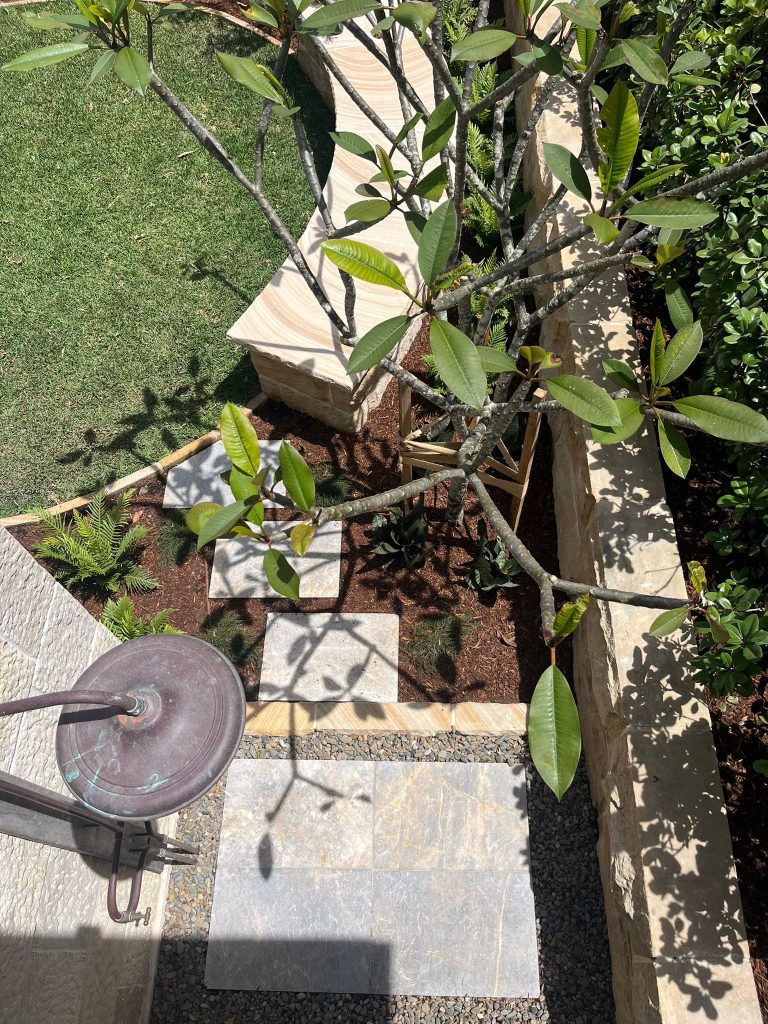
A well-designed garden is about more than beautiful planting or quality paving. The most successful outdoor spaces come from considering how every element works together.
Hardscape and softscape each play an important role. Hardscape provides the structure through paving, pathways, retaining walls, decking and stonework. Softscape brings that structure to life through trees, shrubs, lawn and garden beds.
When you plan these elements together, they create a natural flow between your home and garden. The result is a space that feels cohesive, functional and inviting.
Creating Flow Through Your Garden
A garden should feel easy to move through. Each area should connect naturally to the next.
Hardscape establishes the framework. Pathways guide movement through the garden. Retaining walls create usable levels. Paving and decking define areas for entertaining and relaxing.
Planting can then soften these structural elements. For example, plants can soften the edges of a paved entertaining area. They can also add greenery alongside a pathway and help the hardscape blend into the wider garden.
Your choice of materials also matters. Paving, stonework and timber should complement your home and surrounding planting. They should work together rather than compete for attention.
This is where thoughtful landscape design can make a difference. Considering materials, levels, planting and movement together helps create a garden where every element connects.
Connecting Your Home and Garden
A well-planned landscape can make your outdoor space feel like a natural extension of your home.
The transition between indoors and outdoors is particularly important. Paving or decking can extend your living areas outside. Planting can soften the boundaries and lead the eye towards the garden.
The same principle applies throughout the landscape. An entertaining area might lead into a lawn. The lawn can then transition into garden beds or established planting.
Rather than treating each area as a separate space, consider how they can connect. This creates a garden that feels cohesive rather than divided into individual sections.
Choosing Planting That Works With Your Landscape
Plant selection plays an important role in balancing hardscape and softscape.
The right planting can soften retaining walls and frame pathways. Plants can also provide privacy and introduce colour and texture throughout the seasons.
However, plants need to suit the conditions of the garden and the space available to them.
Consider sunlight, soil, drainage and the mature size of each plant. A plant may look perfect when first installed but become too large for its position as it grows.
This is where horticultural knowledge becomes valuable. At Abloom Landscapes, our experience in both landscape construction and horticulture helps us select planting that works alongside the structural elements of a garden.
Planning for a Garden That Grows
A garden changes over time. Plants grow, materials weather and the landscape develops with the seasons.
Good planning considers how the garden will look and function as it matures. Structural features also need careful planning. They should work with planting, drainage, levels and future maintenance.
Ongoing garden maintenance helps keep the relationship between hardscape and softscape balanced. Regular pruning, mulching, soil improvement and horticultural care help your garden stay healthy as it develops.
At Abloom Landscapes, we combine landscape construction with horticultural expertise. We create outdoor spaces that work beautifully from the beginning and become better with time.
Planning a new garden or considering changes to your existing landscape? Get in touch with Abloom Landscapes to discuss how hardscape and softscape can work together to create a cohesive outdoor space.